 GHADIMI FINANCE
The definition
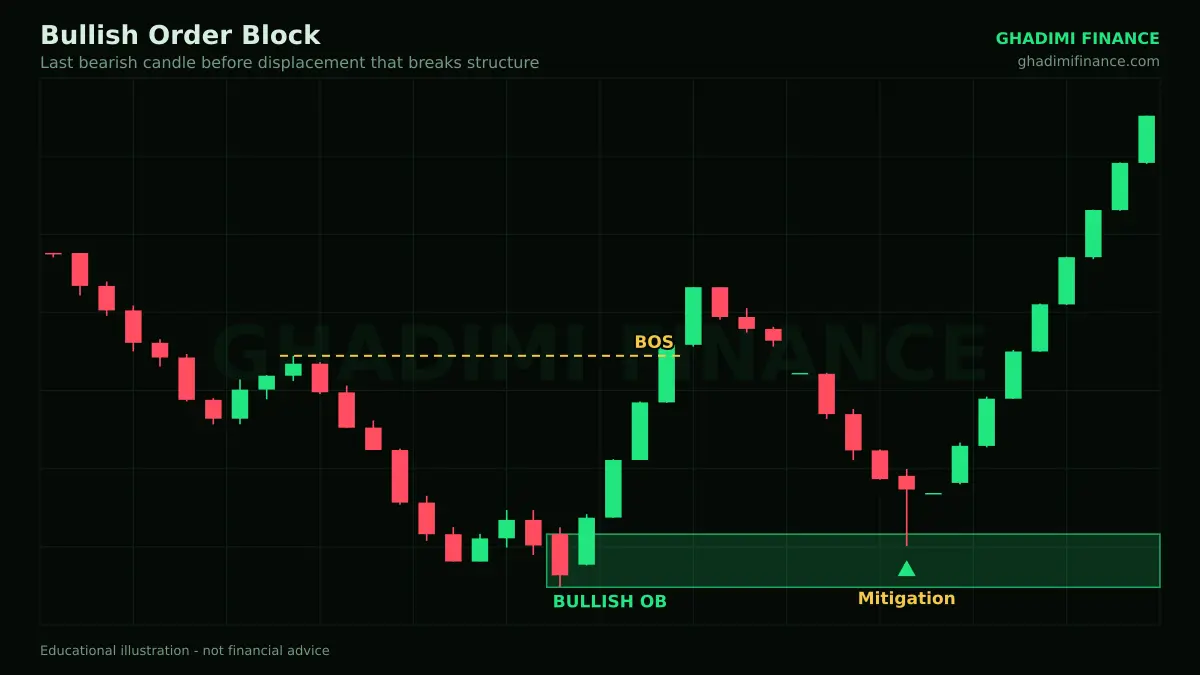
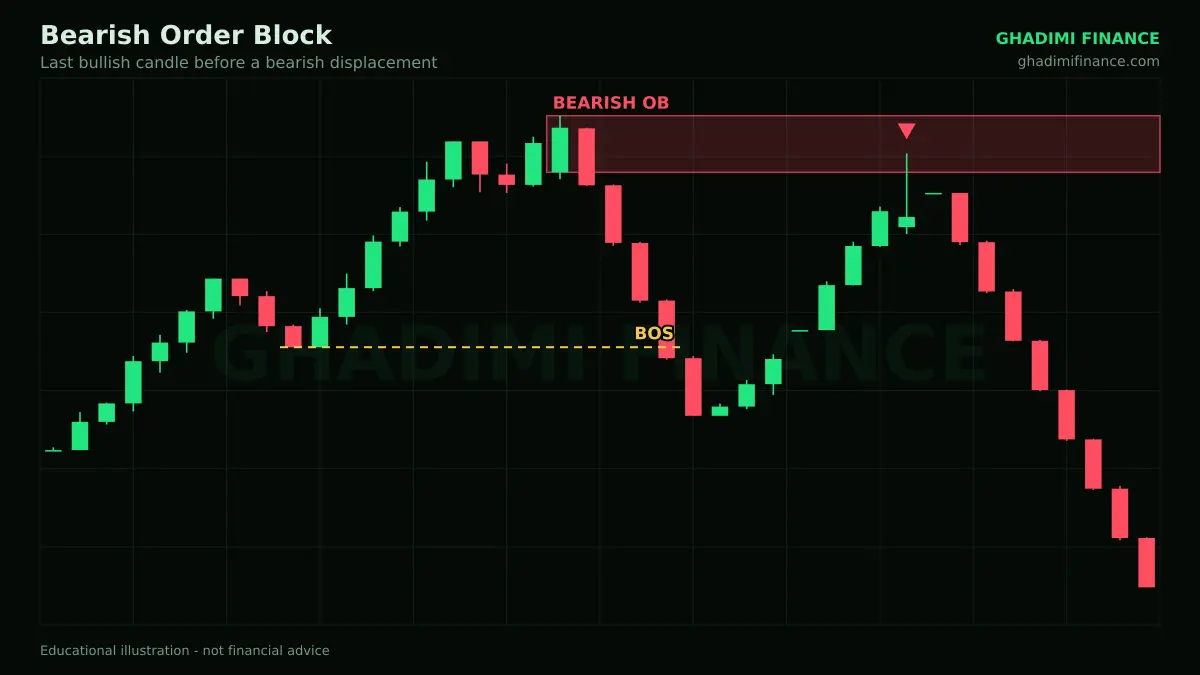
A bullish order block is the last bearish candle before a strong rally that breaks structure. A bearish order block is the last bullish candle before a strong drop. When price returns to it, a reaction in the direction of the original move is expected.
What makes an order block valid
- The move away from it broke structure (BOS).
- The move left a fair value gap or inefficiency.
- Liquidity was taken before it formed (sweep).
- Price has not touched it yet (unmitigated).
- It aligns with the higher-timeframe trend.
Entry and stop on an order block
The common approach is a limit order at the body or the 50% of the block with the stop beyond its wick. The more conservative approach waits for a lower-timeframe confirmation once price reaches the zone. Either way, size from the stop distance, not the other way round.
Breaker and mitigation blocks
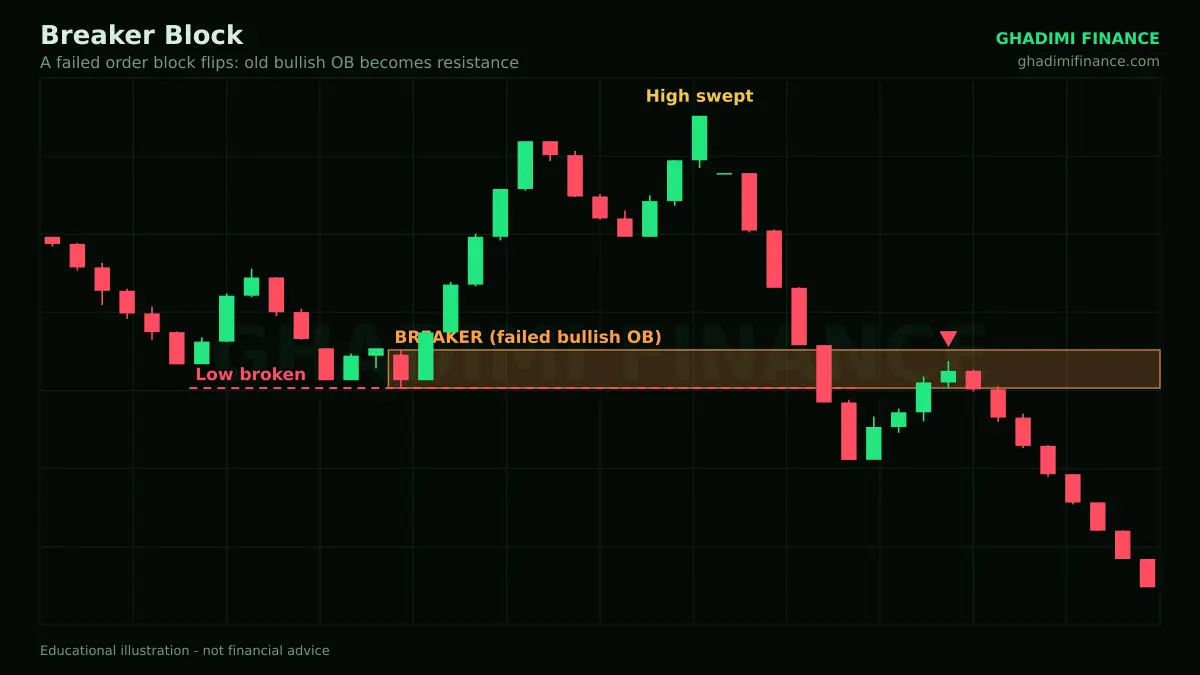
If price breaks through an order block, the zone can flip: a broken bullish block after a high was swept becomes a bearish breaker block. The same break without a sweep is usually called a mitigation block.
Common mistakes
- Marking every opposite candle as an order block.
- Trading against the higher-timeframe trend just because price reached a block.
- Ignoring news and session timing.
- Stops that are too tight on volatile symbols like gold.
Automated orders on order blocks
Traders who use limit orders on order blocks get tired of watching charts. An EA that detects valid blocks and places pending orders with the correct size automates that; see the GHADIMI FINANCE automated EAs.
My view: order block touch + G Candle
A touch of an order block alone is not enough for me; the reaction must be confirmed by a G Candle. I do not draw eighty concepts on a chart: a few simple things placed correctly together build a strong structure. That is the fractal idea.
See it in episode 3 of my Persian video series. — Mojtaba Ghadimi