 GHADIMI FINANCE
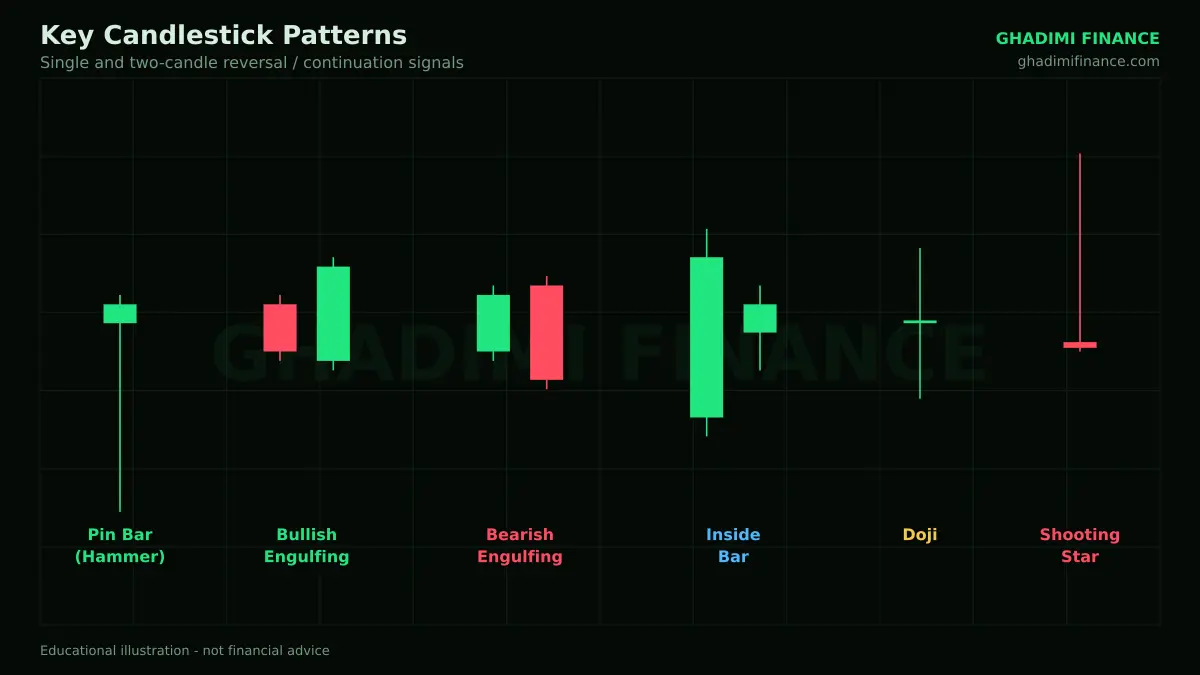
Pin bar and hammer
A small body with a long wick (at least two to three times the body) on one side. A bullish pin bar (hammer) has a long lower wick: sellers pushed price down and buyers took it back. The bearish version is the shooting star, with a long upper wick.
Engulfing
A two-candle pattern where the second body fully covers the previous body. A bullish engulfing is a small bearish candle followed by a larger bullish one that closes above the prior open; the bearish version is the reverse. Control changed hands within one candle, which makes engulfing one of the strongest price action triggers.
Inside bar
A candle whose high and low sit entirely inside the previous candle (the mother bar). It shows compression; a break of the mother bar's high or low often sets the next direction.
Doji
Open and close are almost equal. On its own a doji only shows indecision, but after a long move at an important level it can be the first warning that the trend is tiring.
Location beats shape
The biggest mistake is trading every pattern anywhere on the chart. The same engulfing at real support is a different story:
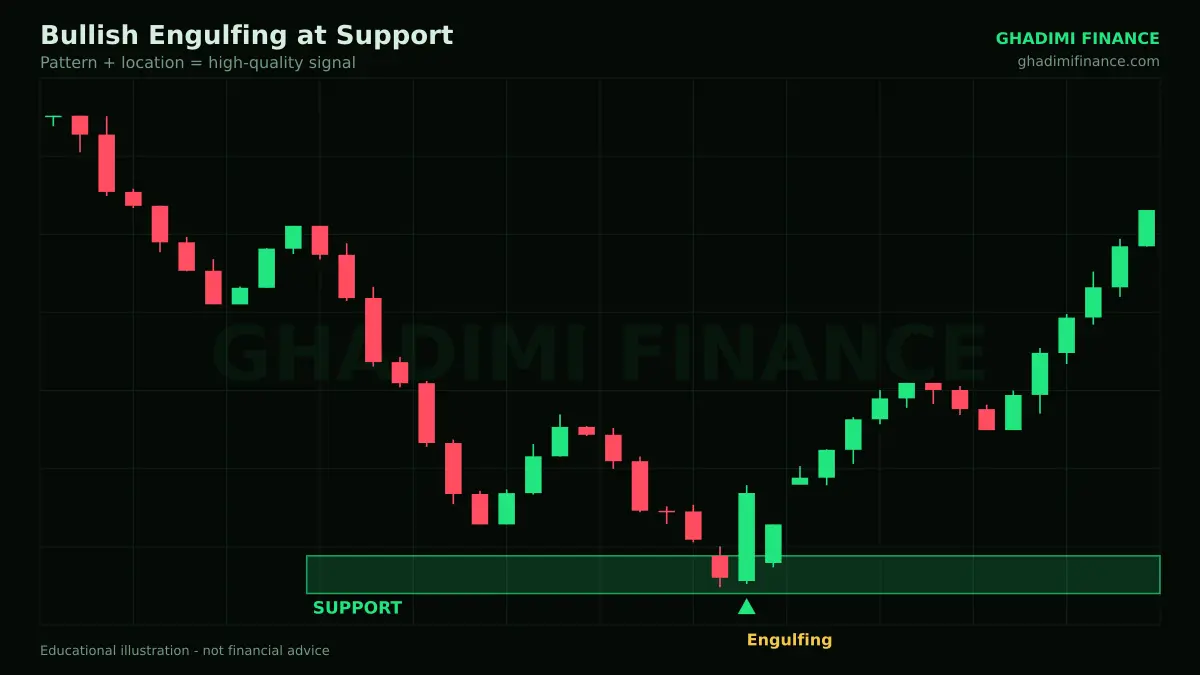
Checklist:
- Did it form at an important level (support and resistance, a trendline, a supply/demand zone)?
- Is it in the direction of the higher-timeframe trend?
- Has the candle closed?
- Is it large compared with the candles around it?
Put the stop beyond the pattern's wick and aim for at least twice the risk (risk to reward). In ICT, the big candle is called displacement and the last opposite candle before it is the order block.